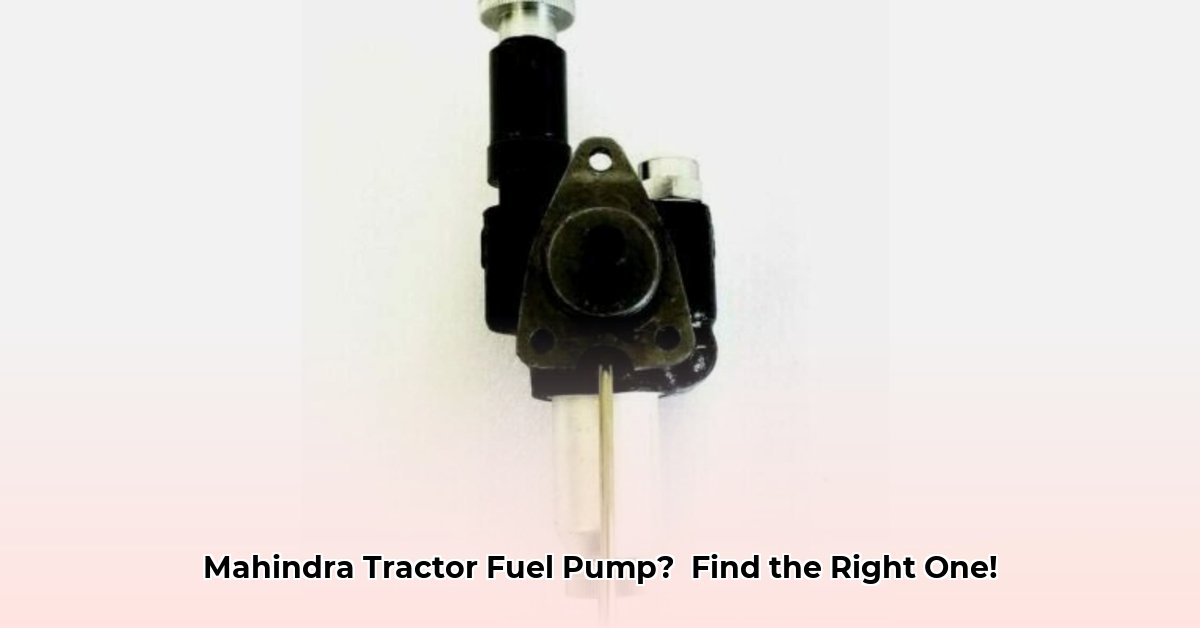
Replacing your Mahindra tractor's fuel pump shouldn't be a frustrating ordeal. However, inconsistent part numbering often complicates the process, leading to downtime and wasted money on incorrect parts. This guide provides a step-by-step approach to finding the correct fuel pump for your tractor, ensuring a smooth repair. For additional help with Mahindra tractor maintenance, check out this helpful resource on Mahindra tractor batteries.
Step 1: Identifying Your Mahindra Tractor Model and Engine Type
Before beginning your search, accurately identify your tractor's model and engine type. This information is crucial for finding the correct fuel pump. Locate your tractor's identification plate, typically near the steering wheel or engine block. This plate will display the model and engine details. Take clear photos of the plate for reference. If you have trouble locating the plate, consult your owner's manual or contact your local Mahindra dealer for assistance. Why is this step so important? Because an incorrect model identification can lead to ordering the wrong part, costing you time and money.
Step 2: Utilizing Multiple Online Resources to Find Potential Part Numbers
Next, leverage multiple online parts suppliers. Start with reputable sources like Mahindradirectparts.com 1 and Billstractor.net (if applicable, ensure Billstractor.net is a reliable source before inclusion). Enter your tractor's model and engine details into the search fields. You'll likely uncover several potential part numbers, even for the same model. Note down all listed part numbers, even if they appear similar – slight variations can exist. This meticulous approach ensures you don't overlook any potential matches. Why use multiple sources? Different suppliers might list different part numbers for what is essentially the same component.
Step 3: Cross-Referencing Part Numbers to Identify Matches and Inconsistencies
Now comes the crucial cross-referencing stage. Compare the various part numbers you've collected from different sources. Are there discrepancies? Minor variations in numbering might reflect manufacturing updates or supplier changes. However, this doesn’t automatically mean the parts are interchangeable! Thorough comparison is essential to avoid ordering the wrong part. What's the risk of overlooking this step? Choosing the wrong part could lead to further mechanical issues or even damage your tractor's engine.
Step 4: Checking Specifications to Ensure Compatibility
Ideally, each part listing will provide critical specifications such as voltage, fuel flow rate (liters per minute or gallons per hour), and pressure (bar or psi). Meticulously compare the specs listed with your tractor’s requirements. Even small discrepancies can hinder proper operation. Match the specifications precisely to ensure compatibility. If a website lacks detailed specifications, contact the supplier directly for clarification before purchasing. What happens if you skip this step? An incompatible pump could damage your fuel system, causing significant repairs and costly downtime. If specifications remain elusive, contact Mahindra directly for assistance.
Step 5: Identifying Reputable Suppliers and Avoiding Counterfeit Parts
Selecting a reputable supplier is crucial. Counterfeit parts are a significant threat, leading to premature failure, costly repairs, and potential safety hazards. Stick to authorized Mahindra dealers or established online retailers with positive customer reviews. Verify the seller's legitimacy before making a purchase. Why is this so important? Counterfeit parts often fail quickly and can be unsafe.
Troubleshooting Common Issues
Ambiguous Part Numbers: If multiple part numbers remain unclear, contact Mahindra directly for clarification. Provide all the information you've gathered. This proactive approach reduces the chances of errors.
Missing Information: If vital information is missing, consult the tractor's manual or contact your local Mahindra dealer. Don't hesitate to seek assistance.
Understanding Fuel Pump Specifications (Optional)
For those comfortable with mechanical details, understanding fuel pump specifications is beneficial. Key aspects include:
Voltage: The electric pump requires the correct voltage for optimal operation. Incorrect voltage can damage the pump and potential electrical components.
Flow Rate: This indicates the fuel volume delivered per unit time. Insufficient flow causes engine starvation, impairing performance.
Pressure: This determines the force of fuel delivery. Incorrect pressure can lead to ineffective fuel delivery or system damage.
A mismatch in any of these specifications can lead to serious problems.
Conclusion: A Smooth Fuel Pump Replacement
Finding the correct Mahindra tractor fuel pump requires careful attention to detail. By meticulously following these steps, identifying your tractor, researching part numbers, cross-referencing your findings, verifying specifications, and selecting reputable suppliers, you'll significantly increase your chances of successful repair, minimizing downtime and avoiding costly mistakes. Remember, a thorough approach ensures a smooth and efficient fuel pump replacement.